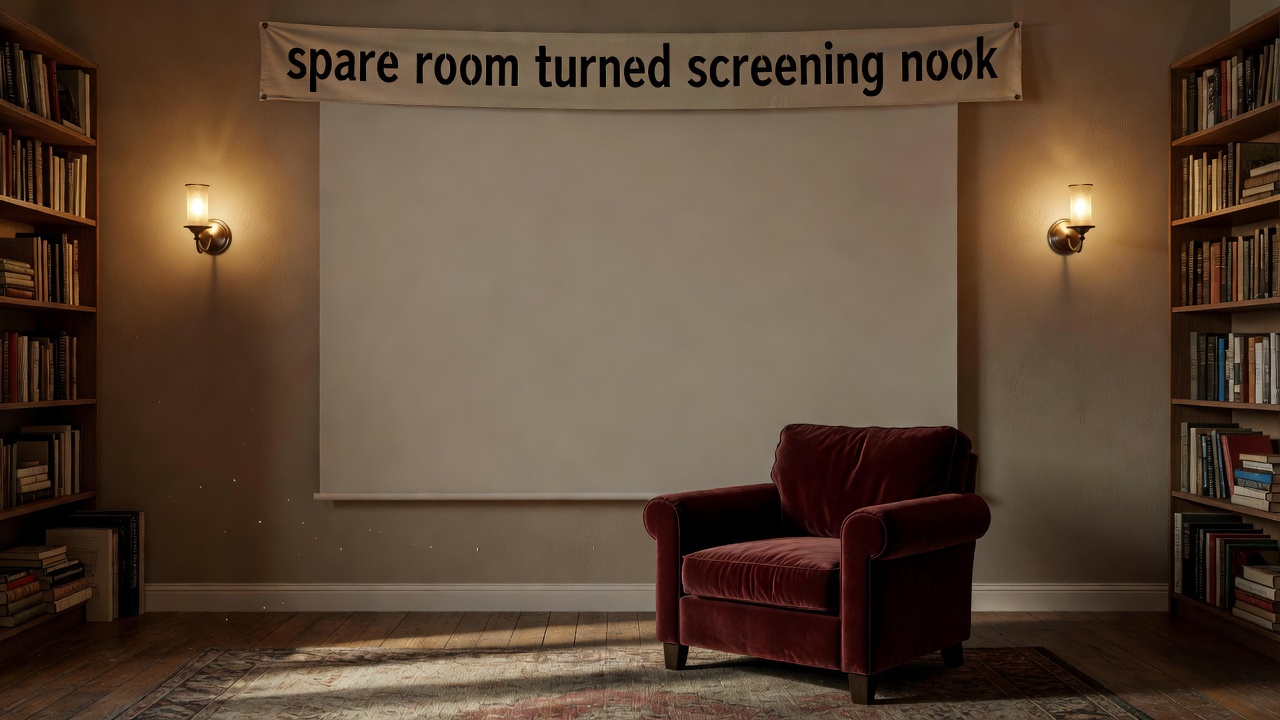
Ask anyone with a home screening space how it started, and the answer is rarely "I planned it." More often it began with a rainy weekend, a borrowed projector pointed at a bare wall and a moment of surprise: the film felt bigger, warmer, more like an event. From there, people start rearranging, and before long there is a room in the house with its own personality.
We spent time with several of them. A retired teacher in Bristol who converted her late husband's study into a twelve-seat "parlour cinema" for her grandchildren. A pair of nurses in Manchester who work night shifts and built a blackout nook so they could watch films at breakfast. A student in Glasgow whose screening room is, frankly, a mattress, a sheet and fairy lights. All three describe the same feeling: the room is about who sits in it.
Start with darkness, not gear
The single most common lesson is that control of light beats any equipment upgrade. Projectors and screens look washed out when daylight or a ceiling bulb spills across them. Thick lined curtains, blackout blinds or even a heavy blanket over a window make a dramatic difference. Darker walls help too; many hosts paint the wall around the screen a deep matte tone so reflected light does not bounce back onto the image. Matte finishes matter more than colour, because gloss reflects.
Soft, low lighting placed behind or beside viewers keeps the room safe and welcoming without spoiling contrast. A dimmable lamp on the floor or a strip of warm light behind the screen, sometimes called bias lighting, can also reduce eye strain during long sessions. The Bristol host keeps a tiny amber lamp near the door so grandchildren can find the way to the loo mid-film.
Seating that invites people to stay
Cinemas like the Electric Cinema on Portobello Road, open since 1910, became famous for armchairs, footstools and sofas. That spirit translates beautifully to home rooms. Variety helps: a sofa for couples, floor cushions for children, one upright chair for anyone with a sore back. Our Manchester nurses swear by a low footrest and a basket of blankets.
Sight lines are the practical part. Everyone should see the whole screen without craning around a head. In a small room, staggering seats slightly or putting the front row on floor cushions often solves the problem without building a riser.
Picking a sensible screen size
Bigger is not always better. A screen that is too large for the room forces viewers to turn their heads, and too small feels like watching through a letterbox. A widely used guideline from the Society of Motion Picture and Television Engineers (SMPTE) suggests the screen should fill roughly 30 degrees of your field of view from the main seat; enthusiast groups often aim a little wider, nearer 40 degrees. In plain terms, many people are comfortable sitting about one and a half to two times the screen width away.
Projectors give flexibility, televisions give brightness. Neither choice is wrong. The Glasgow student uses a second-hand projector and a white bed sheet stretched taut over a frame; he says the stretching matters far more than the fabric.
Warmth, air and the little comforts
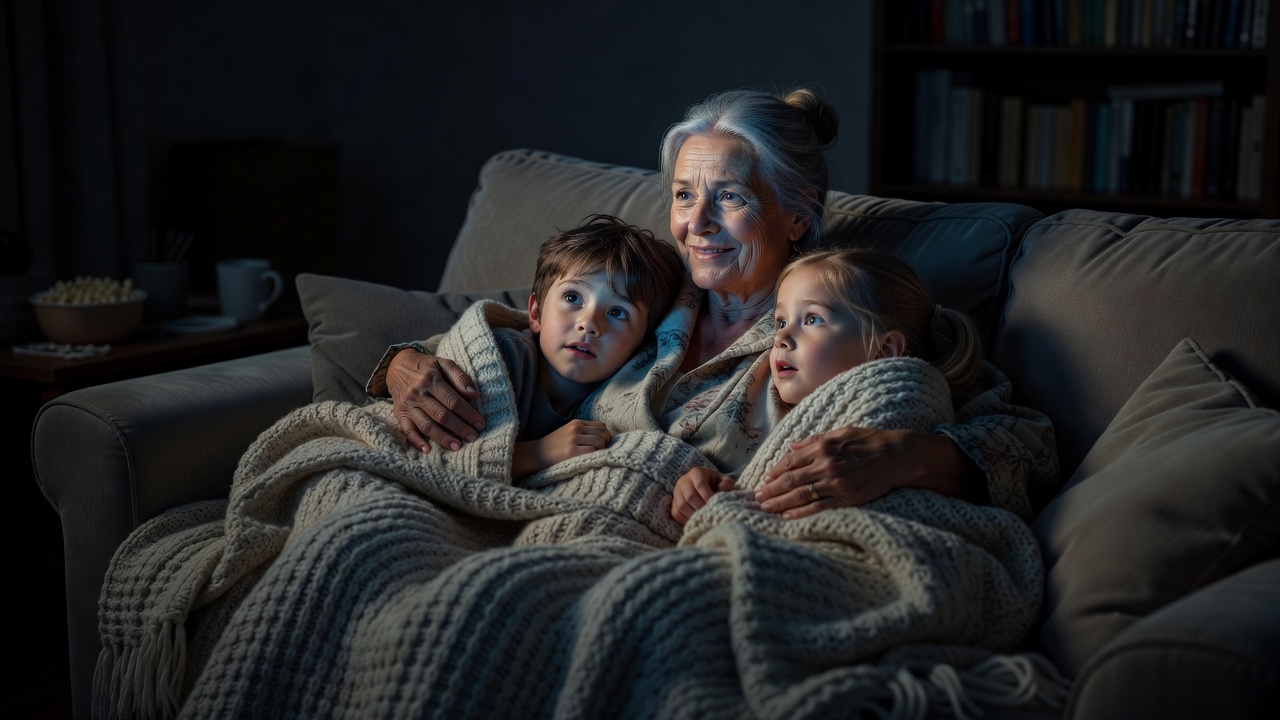
Closed rooms grow warm and stuffy quickly, especially with a projector humming. Keep some airflow, make sure equipment has space to breathe and never block vents. A side table for drinks within arm's reach of every seat stops spilled-cup tragedies. Some hosts print a tiny programme card; others ring a little bell before the lights go down. These rituals cost nothing and make an ordinary evening feel deliberate.
Making it work for everyone
A truly welcoming room thinks about guests who are hard of hearing, partially sighted or neurodivergent. Subtitles on by default, a seat near the speaker, a quieter volume for sensitive ears and an easy exit route all signal that people are wanted. The Bristol host keeps a notebook of each grandchild's preferences, which she says is the most important piece of equipment she owns.
If you take one idea away, let it be this: build the room around the people first, the screen second. Everything else can be added slowly, one thoughtful evening at a time.